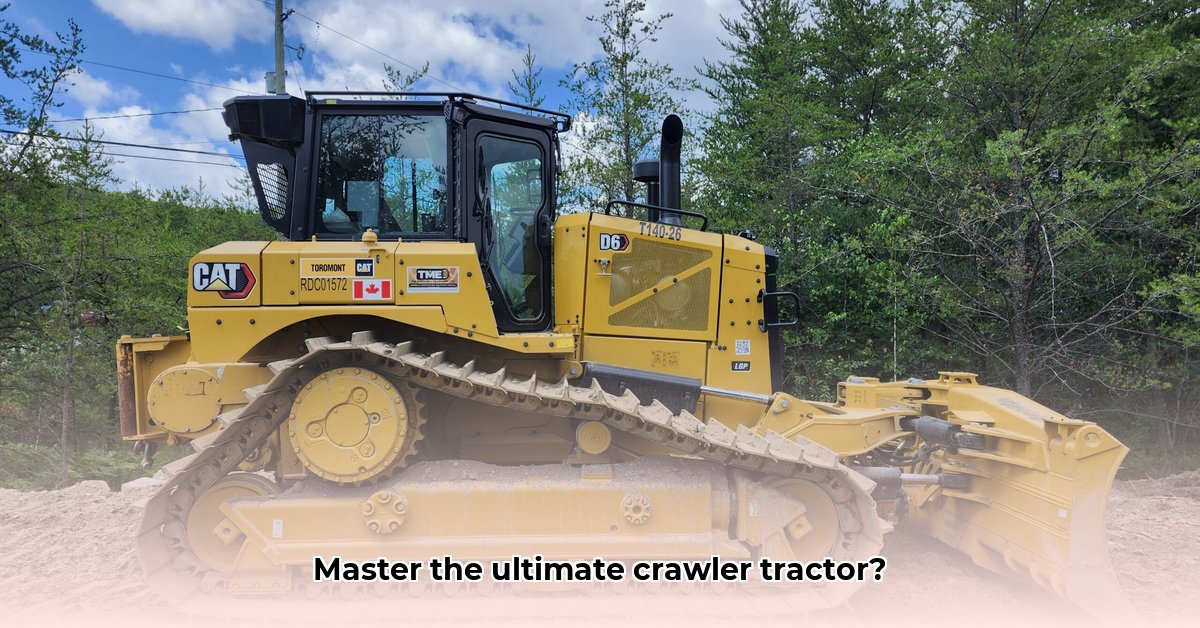
Choosing the Right Caterpillar Crawler Tractor
Selecting the right Caterpillar crawler tractor is crucial for project success. This process involves considering several key factors to ensure the chosen machine optimally meets project demands, budget limitations, and operational safety requirements. Ignoring these factors can lead to inefficiencies, increased costs, and potential safety hazards. What are the most impactful decisions you need to make?
1. Project Scope and Scale: Begin by assessing the project's size and complexity. A small landscaping project requires a different machine than a large-scale highway construction project. Smaller projects may only need a compact model (like a D3 series), while extensive earthmoving tasks demand a heavy-duty tractor (like a D8 series). Accurate assessment of the scale and nature of the work is paramount.
For those interested in vintage Caterpillar models, check out this resource.
2. Terrain Analysis: Understanding Soil Conditions: The type of soil significantly impacts tractor selection. Soft, sandy soil requires less powerful machines compared to rocky, dense terrain. Factors like soil density, moisture content, and the presence of obstacles (rocks, roots) directly influence the required tractor's specifications. A rocky site necessitates a robust dozer with enhanced blade durability, for example.
3. Power and Blade Selection: Matching Power to Application: Horsepower determines the amount of earth a tractor can move. Larger projects inherently require more horsepower. However, selecting the appropriate blade type—straight, angle, or U-blade—is equally crucial. U-blades excel at moving large volumes of material; straight blades offer precision for grading; angle blades provide versatility. The blade's design and the machine's horsepower must be precisely aligned to the project's requirements. Are you aiming for sheer volume or extreme accuracy?
4. Budgetary Considerations and Total Cost of Ownership (TCO): Caterpillar crawler tractors represent a sizable investment. The initial purchase price is only part of the equation. Factor in ongoing maintenance, fuel consumption, operator salaries, potential repairs, and insurance. A thorough TCO analysis, considering leasing versus purchasing, is critical for long-term financial viability. Remember, the cheapest option isn't always the most cost-effective in the long run. Do you have a fixed budget, or is financing an option?
5. Leveraging Dealer Expertise: Caterpillar dealers possess extensive knowledge and experience. Consult with your local dealer during the selection process. They provide insights beyond specifications, offering guidance on financing, maintenance, and logistics. Their expertise can save time and resources, ultimately resulting in a more efficient and cost-effective outcome.
6. Model Comparison: Key Specifications at a Glance
The table below provides a simplified comparison of common Caterpillar dozer models. Note that exact specifications vary by model year and configuration. Always refer to Caterpillar's official resources for the most accurate data. This comparison should inform your decision-making process. What specific needs does your project present?
| Model | Approximate Horsepower Range | Common Blade Types | Typical Applications |
|---|---|---|---|
| D3 Series | 60-80 HP | Straight, Angle | Light construction, landscaping, site preparation |
| D6 Series | 100-150 HP | Straight, Angle, U-blade | Medium-duty construction, land clearing, site prep |
| D8 Series | 200-350 HP+ | Straight, Angle, U-blade | Heavy-duty construction, large-scale earthmoving |
Operating Your Caterpillar Crawler Tractor: Safety and Efficiency
Safe and efficient operation of a Caterpillar crawler tractor demands adherence to strict safety protocols and regular maintenance. Investing in operator training is paramount to ensure both productivity and safety. What are the key steps you must take?
1. Pre-Operation Inspection: Before starting the engine, conduct a thorough inspection. Check fluid levels (oil, coolant, fuel), tire pressure (if applicable), and examine the machine for any damage or wear. This pre-operation checklist is vital for identifying issues that could impair functionality or compromise safety. Should you identify a problem, report it immediately.
2. Operator Training and Certification: Only trained and certified operators should operate heavy machinery. Caterpillar offers comprehensive training aimed at both safety and optimal operational efficiency. Investing in operator training is an investment in safety and productivity; it is not optional.
3. Regular Maintenance and Preventative Measures: Scheduled maintenance is crucial for maximizing machine lifespan and minimizing downtime. Adhering to Caterpillar's recommended maintenance schedule (including oil changes, filter replacements, and inspections) prevents costly repairs and ensures prolonged operational efficiency.
4. Safety Precautions: Prioritizing Safety: Always wear appropriate personal protective equipment (PPE), including hard hats, safety glasses, and high-visibility clothing. Maintain awareness of surroundings and other workers. Never operate the machine when fatigued or under the influence of substances.
Technical Specifications and Actionable Insights
Detailed technical specifications vary by model; however, Caterpillar's official resources provide comprehensive information. This includes engine power, hydraulic systems, ground clearance, and blade dimensions. Understanding these specifications is crucial for informed decision-making.
Actionable Insights for Stakeholders:
For Caterpillar: Continue developing user-friendly resources and enhancing training programs. Consider providing comparative data between models in an easily accessible format.
For Construction Companies: Perform a thorough needs assessment before purchasing. Work closely with Caterpillar dealers to obtain precise specifications. Analyze leasing versus purchasing.
For Investors: Research Caterpillar's market position, its commitment to innovation, and its financial performance to assess long-term investment viability.
Regulatory Compliance: Meeting Legal Requirements
Adherence to environmental and safety regulations is non-negotiable. This encompasses emission standards, safety guidelines, and local/national regulations. Regular inspections and maintenance are essential for compliance. Staying informed about updated regulations is pivotal for avoiding legal issues.
Conclusion: Maximizing Your Caterpillar Investment
Successful operation of a Caterpillar crawler tractor requires careful planning, thorough training, and a steadfast commitment to safety and regulatory compliance. This guide, combined with expert advice, lays the groundwork for efficient and effective use of this powerful equipment. Continuous learning and staying informed regarding industry advancements are essential for long-term success.